

The Blackthorn in Early Spring: Ireland’s First Blossoming Hedge
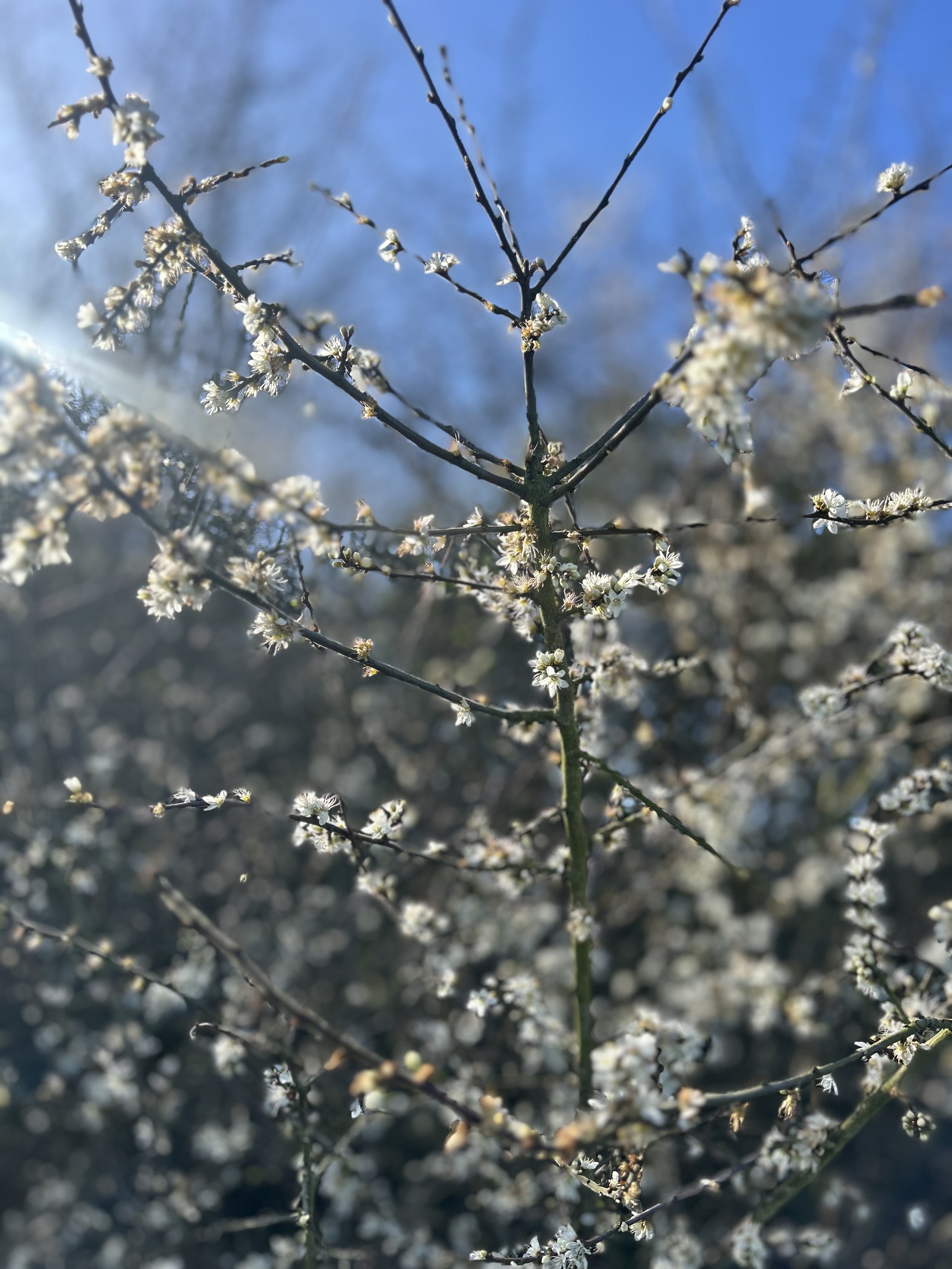
Every year in early spring, before most trees have even begun to leaf, the Irish countryside suddenly becomes dusted with delicate white flowers. These blossoms belong to blackthorn (Prunus spinosa) — one of the earliest flowering native trees in Ireland and a vital species in traditional hedgerows and woodland edges.
If you are walking rural paths or exploring forest margins in March and early April, you will almost certainly encounter the striking sight of blackthorn blossom appearing on dark, thorny branches before any leaves emerge.
For many nature lovers, this moment signals that spring has truly arrived.
How to Identify Blackthorn
Blackthorn is easy to recognise at this time of year because of its distinctive flowering pattern.
Key identification features include:
Small white five-petalled flowers
Flowers appearing before the leaves
Dark, almost black bark
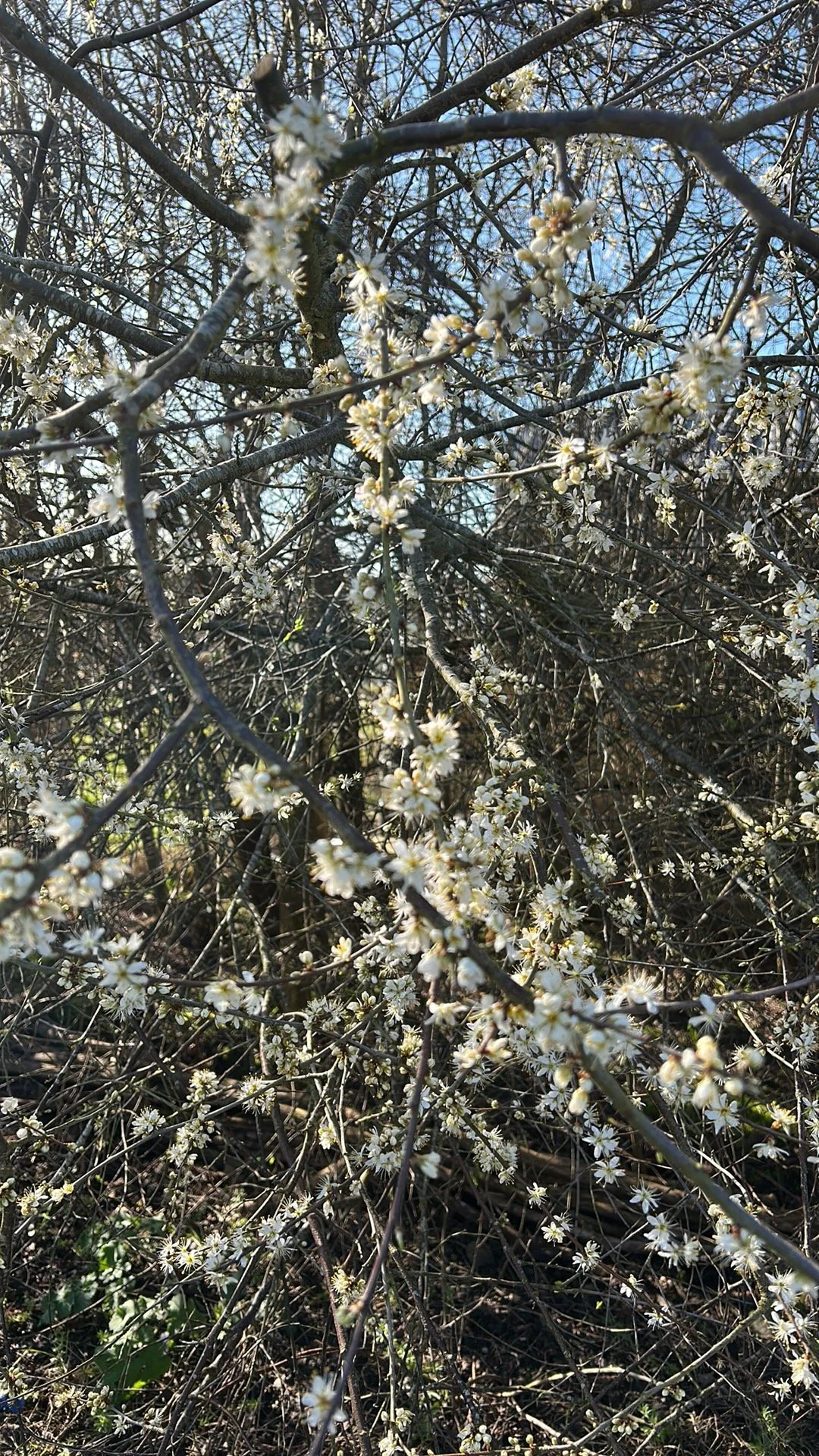
Dense thorny branches
Usually growing in hedgerows, woodland edges, and scrub
Because the flowers emerge on bare branches, entire hedges can appear covered in white foam-like blossom, creating one of the most beautiful natural displays of early spring in Ireland.

A Vital Tree for Wildlife
The blackthorn tree plays a crucial role in supporting biodiversity across Ireland’s countryside.
Its early blossoms provide one of the first major nectar sources for pollinators emerging from winter, including:
wild bees
hoverflies
early butterflies
Later in the year, the tree produces sloes, the small dark purple fruits famously used to make sloe gin. These fruits are also an important autumn food source for birds and small mammals.
The dense thorny structure of blackthorn hedges also creates excellent nesting habitat for birds such as:
wrens
blackbirds
whitethroats
robins
Because of this, blackthorn is considered a keystone species in traditional Irish hedgerows.
The Folklore of Blackthorn
Blackthorn has a deep connection with Irish folklore and seasonal traditions.
Historically, the appearance of blackthorn blossom was sometimes linked with a cold spell known as “Blackthorn Winter”, when temperatures briefly drop just after spring seems to begin.
The tree was also traditionally associated with:
protection
boundaries
ancient hedgerow systems
rural crafts and walking sticks
Because the wood is extremely hard and dense, it was commonly used for shillelaghs and tool handles.
Where You’ll See Blackthorn in Ireland
Blackthorn thrives in many habitats across Ireland and is particularly common in:
old field hedgerows
scrubland
woodland edges
coastal hedges
traditional farmland boundaries
It often grows alongside other native hedge species such as hawthorn, hazel, dog rose, and elder.
Together, these plants form the living structure of Ireland’s historic hedgerow landscape.
A Sign of the Changing Season
For those who follow seasonal cycles closely, the appearance of blackthorn blossom is one of the clearest signals that winter is ending.
Its flowers arrive:
before hawthorn
before most woodland leaves
before many other native trees begin to bloom
This makes it one of the earliest visible bursts of life in the Irish landscape each year.
Protecting Ireland’s Native Trees
Native species like blackthorn are essential for healthy ecosystems, resilient hedgerows, and thriving wildlife.
Protecting and restoring native woodland and hedgerows helps to:
support biodiversity
improve soil health
provide habitat corridors for wildlife
strengthen climate resilience
By planting and protecting native trees, we help ensure that future generations will continue to experience the spectacular early-spring blossom of blackthorn across Ireland’s countryside.