

Across Ireland in late summer and early autumn, clusters of bright red berries appear on a graceful native tree known as the Rowan (Sorbus aucuparia), often called the Mountain Ash.
This beautiful tree grows along woodland edges, mountain slopes, hedgerows and open landscapes throughout Ireland. With its delicate leaves, creamy spring flowers and vivid autumn berries, the Rowan is one of the most distinctive native trees in Irish forests.
For centuries it has also held a special place in Irish folklore, wildlife ecology and poetry.
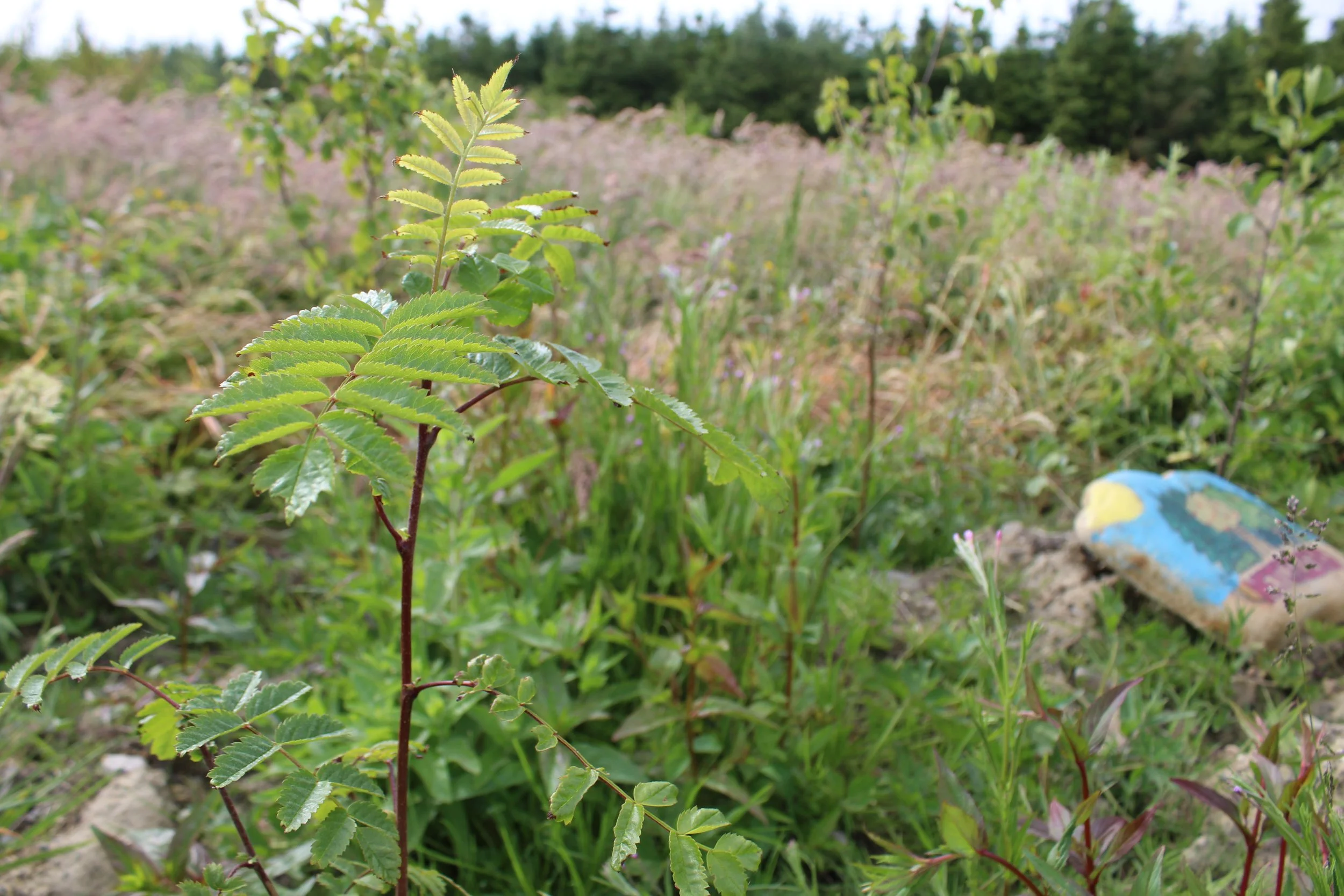
A Rowan Tree growing on Cloudforest Three at Doonaha County Clare Ireland
How to Identify the Rowan Tree
The Rowan is a small to medium-sized native tree that typically grows between 5 and 15 metres tall.
Key features that make it easy to recognise include:
• Feather-like leaves made up of many narrow leaflets
• White flower clusters in late spring (May–June)
• Bright red berries in late summer and autumn
• Smooth grey bark when young
• A light, open canopy
The berries grow in dense clusters and can be seen glowing red across hillsides and woodland edges from August through October.
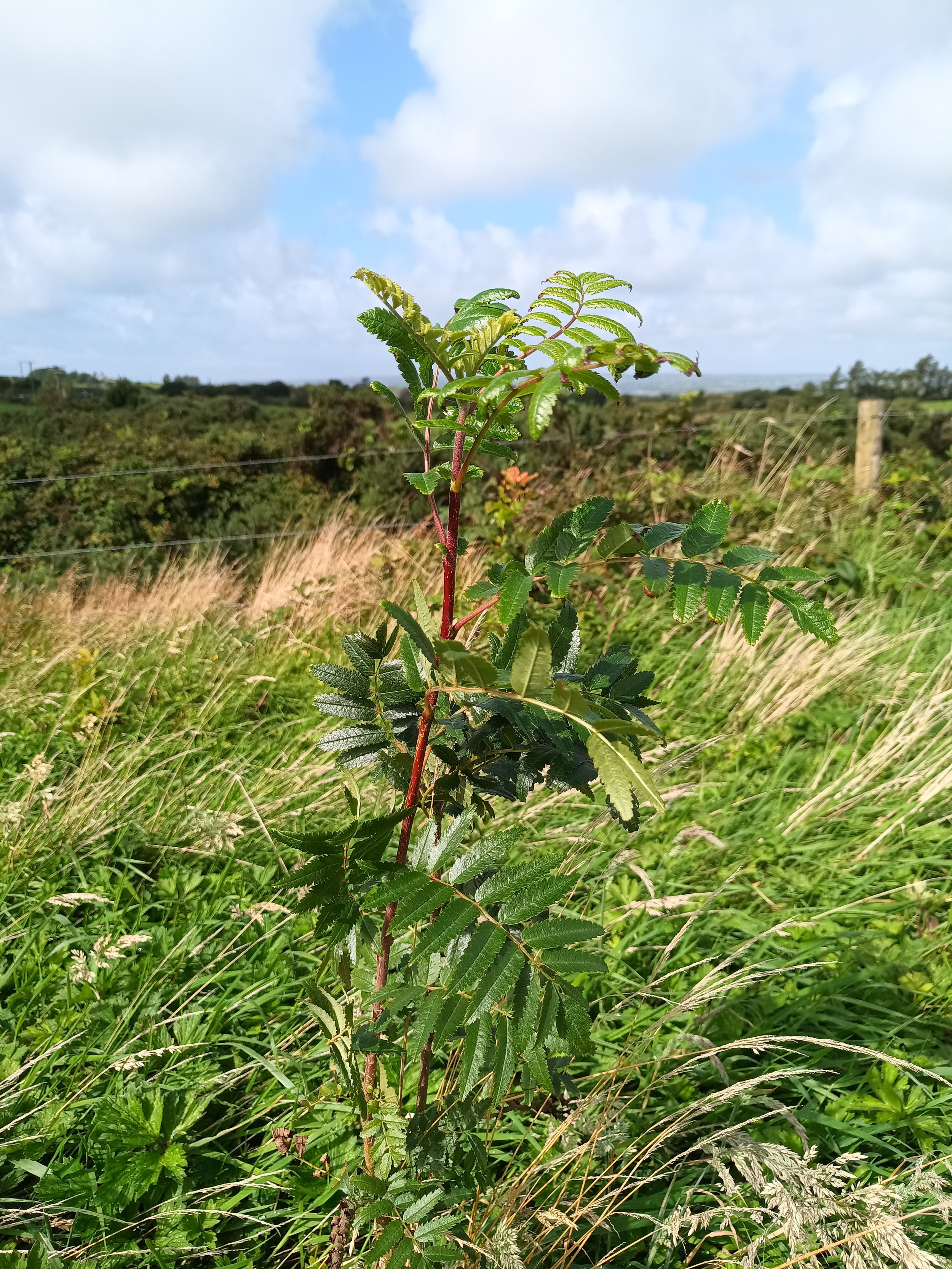
A Rowan Tree Growing on Cloudforest One Lahinch
Why Rowan Trees Are Important for Wildlife
The Rowan is an incredibly valuable tree for wildlife in Ireland.
In spring, its flowers attract many pollinators including:
bees
hoverflies
beetles
In late summer and autumn, the berries become an essential food source for birds such as:
blackbirds
thrushes
waxwings
redwings
Migrating birds especially depend on Rowan berries as they build energy for long journeys.
Because of this, Rowan trees play an important role in maintaining biodiversity in Irish woodlands and hedgerows.
Rowan in Irish Folklore
The Rowan tree has long been associated with protection and magic in Celtic tradition.
Historically, Rowan trees were believed to protect homes, farms and livestock from misfortune. Small crosses made from Rowan twigs were sometimes placed above doors or in barns.
For this reason, Rowan trees were often left standing in fields or near houses, even when land was cleared.
Today, many solitary Rowan trees scattered across Ireland’s countryside may be remnants of these traditions.
The Rowan Tree in Irish Poetry
The striking red berries of the Rowan have inspired many writers and poets who observed the Irish landscape closely.
The Nobel Prize-winning poet Seamus Heaney captured the vivid colour of the tree in a beautiful line from his poem Song:
“A rowan like a lipsticked girl.”
— Seamus Heaney
The image perfectly reflects how the bright berries can appear almost like a splash of colour against the green leaves or grey branches of the tree.
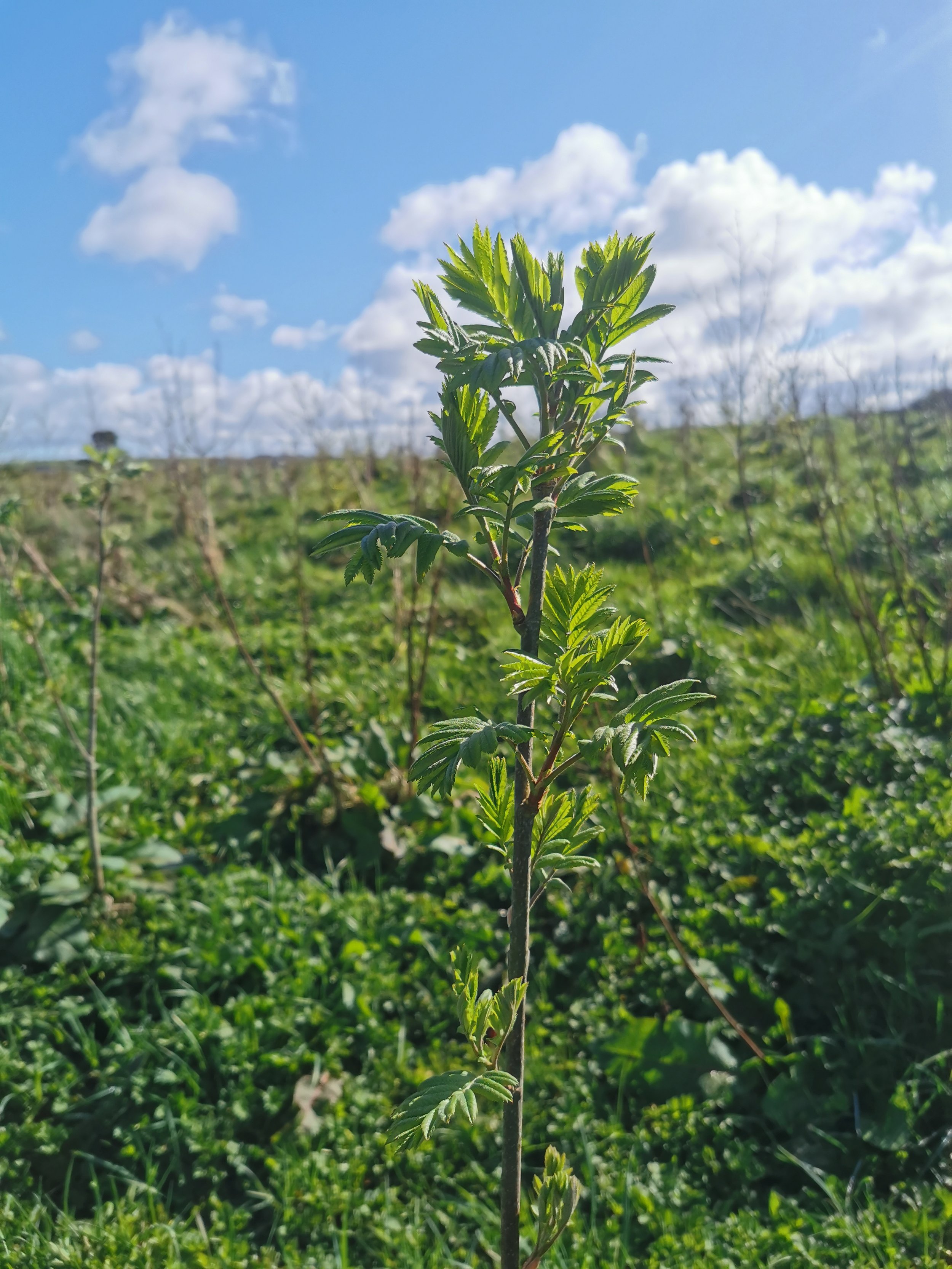
Where Rowan Trees Grow in Ireland
Rowan trees are highly adaptable and thrive in many Irish environments.
They are commonly found in:
upland forests
woodland edges
hedgerows
mountain slopes
coastal landscapes
Because they tolerate wind, cold and poor soils, Rowan trees often grow in places where other species struggle.
They are especially common in western and northern upland areas of Ireland.
Protecting Ireland’s Native Trees
Native trees such as Rowan are essential for healthy ecosystems.
Planting and protecting native woodland helps:
• support biodiversity
• improve soil health
• provide habitat for wildlife
• strengthen Ireland’s resilience to climate change
By restoring native forests and hedgerows, we help ensure that Rowan trees continue to brighten Ireland’s landscapes with their flowers, berries and cultural heritage.
Frequently Asked Questions About Rowan Trees
Are Rowan berries edible?
Rowan berries are technically edible but extremely bitter when raw. They have traditionally been used to make jams, jellies and wines, often after frost softens their flavour.
Are Rowan trees native to Ireland?
Yes. Sorbus aucuparia is a native Irish tree found naturally in forests, hedgerows and upland landscapes.
Why are Rowan trees associated with protection?
In Celtic folklore, Rowan trees were believed to ward off bad luck and harmful spirits. Rowan branches were sometimes used as protective charms.
When do Rowan berries appear?
Rowan berries usually appear in late summer and early autumn, typically from August to October.
Other interesting trees