

Black Arches on the Move: Why Hundreds of Peacock Butterfly Caterpillars Have Chosen Cloudforest One
Nature's Nursery: A Wonderful Discovery at Cloudforest One
One of the greatest rewards of restoring native woodlands isn't just watching trees grow—it's witnessing wildlife return.
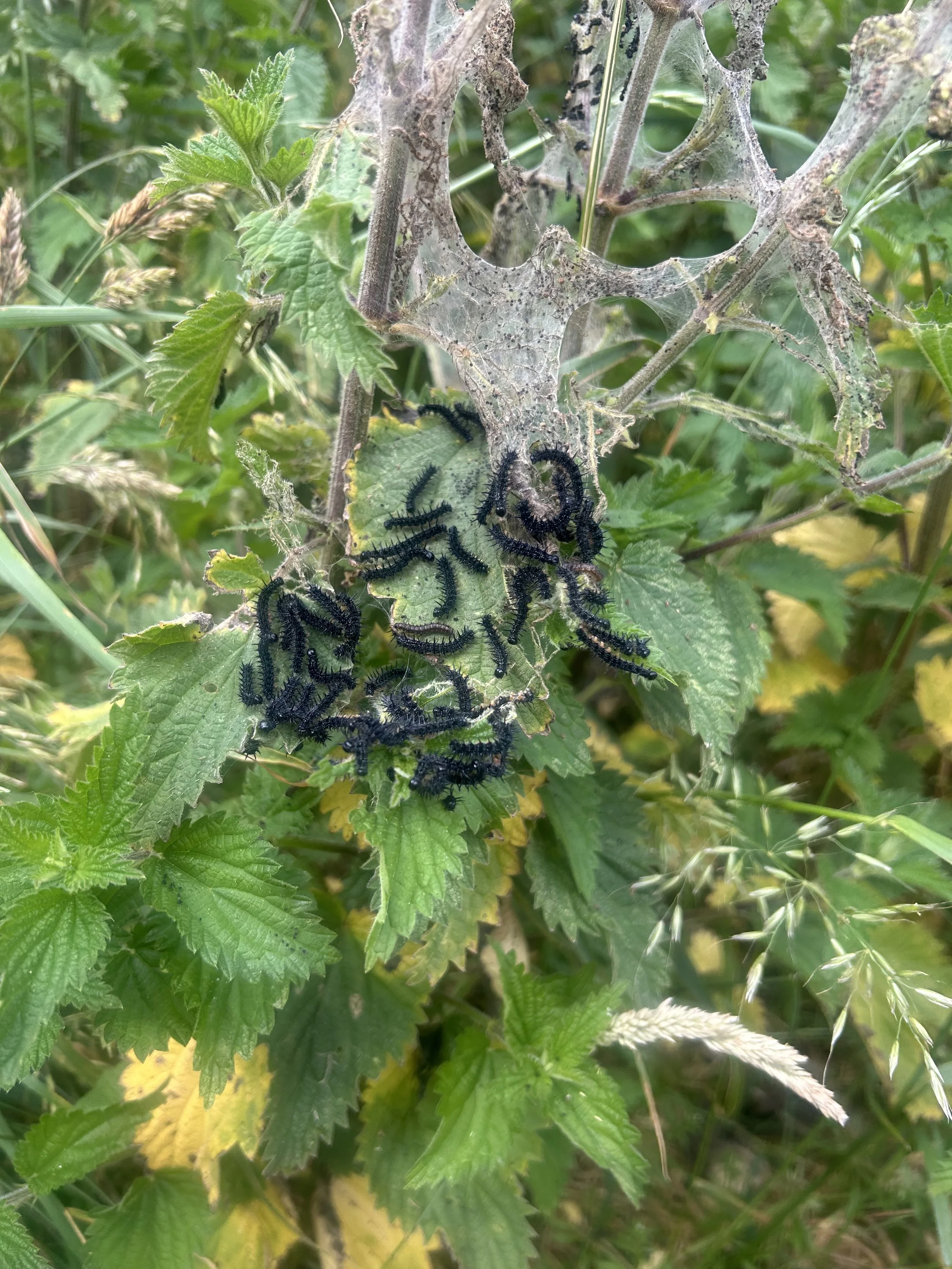
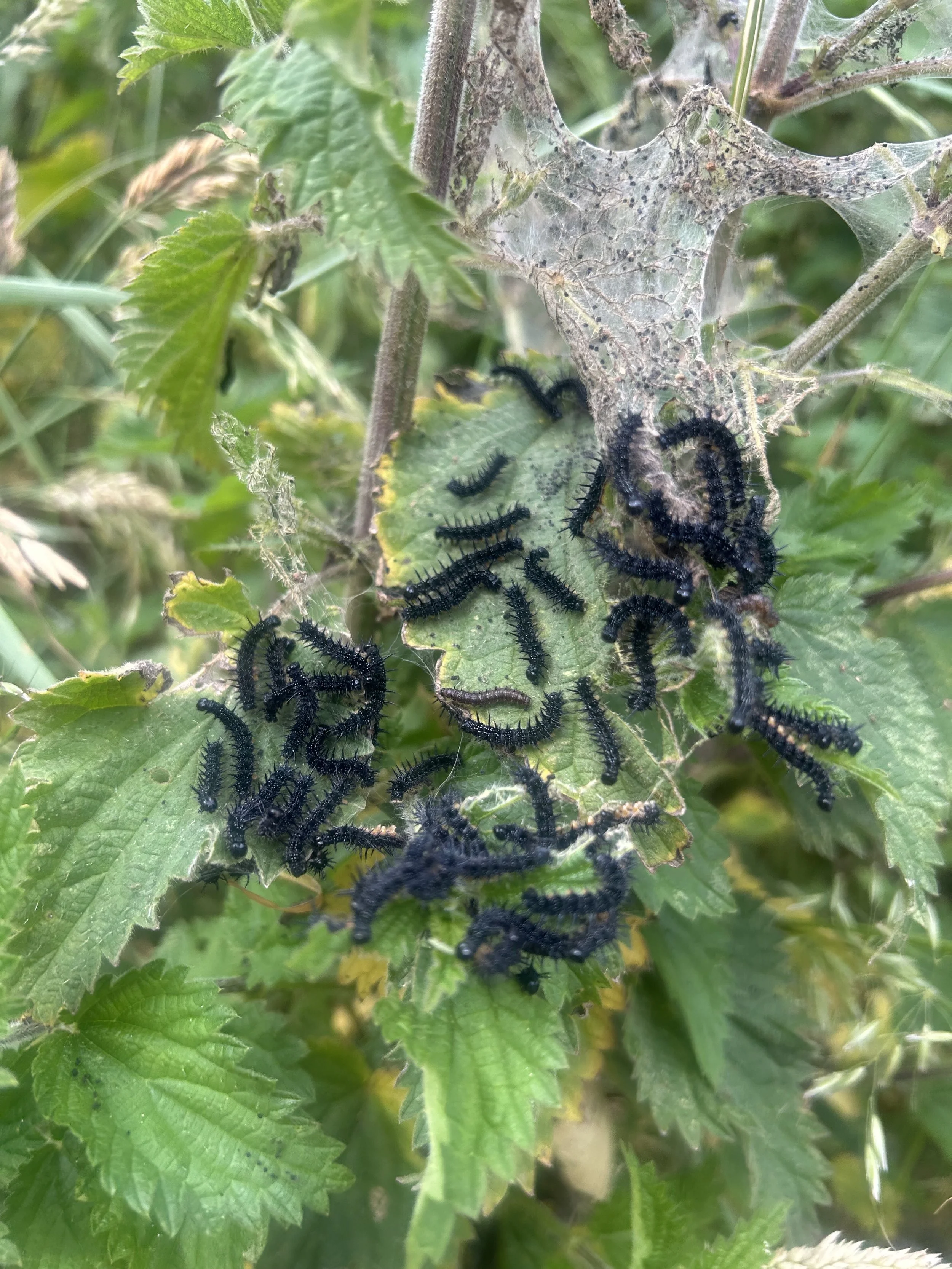
This week, while exploring Cloudforest One in Lahinch, County Clare, we came across one of summer's most remarkable sights: dozens of Peacock Butterfly caterpillars (Aglais io) clustered together on a patch of native nettles.
Their dramatic black, spiky appearance often surprises visitors, but these tiny creatures are one of Ireland's most important native butterfly species and a wonderful indicator of a healthy ecosystem.
The discovery perfectly illustrates why biodiversity restoration is about so much more than planting trees.
A Closer Look at the Peacock Butterfly Caterpillar
At first glance they appear almost alien.
Jet black with rows of tiny spikes, these caterpillars live communally during the early stages of their lives, spinning delicate silk webs over their food plants for protection.
The photograph taken at Cloudforest One captures this behaviour perfectly, showing dozens of caterpillars feeding together beneath a protective silk tent.
This communal lifestyle helps defend them from predators while they are at their most vulnerable.
As they mature, they gradually disperse and continue feeding independently before eventually pupating into one of Ireland's most recognisable butterflies.
Why Are They Living on Nettles?
Many people see stinging nettles as weeds.
Nature sees something very different.
The Peacock Butterfly depends almost entirely on Common Nettle (Urtica dioica) as the food source for its young.
Without healthy patches of nettles, there would be very few Peacock Butterflies.
At Cloudforest One we deliberately allow areas of native vegetation—including nettles—to thrive because they provide essential habitat for countless insects, pollinators and birds.
Sometimes the plants we value least are among the most important.
One of Ireland's Most Beautiful Butterflies
The adult Peacock Butterfly is impossible to mistake.
Its wings display spectacular eye-like markings that resemble the feathers of a peacock.
These striking patterns aren't just beautiful—they're an effective defence mechanism.
When threatened, the butterfly suddenly reveals these large "eyes," startling birds and giving it precious seconds to escape.
Unlike many butterflies, Peacock Butterflies also hibernate as adults, meaning they can often be seen on surprisingly warm winter days before becoming active again in spring.
Why This Matters for Biodiversity
Finding healthy populations of butterfly caterpillars tells us something important.
It means the habitat is working.
Native woodland restoration isn't simply about growing trees.
It's about rebuilding an entire web of life.
Every native tree creates opportunities for:
Butterflies
Moths
Native bees
Hoverflies
Beetles
Birds
Bats
Small mammals
Fungi
Mosses and lichens
Butterflies are particularly valuable because they act as bioindicators—their presence reflects the health of the wider environment.
When butterflies thrive, many other species are thriving too.
Cloudforest One: A Forest Alive
Cloudforest One has become far more than a planting project.
Today it supports an ever-growing range of wildlife, including:
Native woodland birds
Kestrels
Pollinating insects
Wildflowers
Native bees
Frogs
Countless invertebrates
Acoustic bird monitoring through BirdWeather
Seasonal butterfly populations like these Peacock caterpillars
Every visit reveals something new.
Nature rewards patience.
Why Native Woodland Restoration Matters
Ireland has one of the lowest levels of native woodland cover in Europe.
Projects like Cloudforest One help reconnect fragmented habitats, allowing wildlife to return naturally.
The appearance of Peacock Butterfly caterpillars is exactly the kind of ecological success we hope to see.
Nobody introduced them.
They found the habitat themselves.
That is perhaps the greatest compliment nature can give.
A Reminder to Look Closer
Many people walk past a patch of nettles without giving it a second thought.
Yet hidden among the leaves can be hundreds of future butterflies quietly transforming.
Nature doesn't always shout.
Sometimes it whispers.
And if we slow down long enough, it rewards us with moments like this.
Be Part of Ireland's Growing Cloudforest
Every tree planted through Cloudforests helps create habitats where wildlife can flourish.
Our CoolPartners aren't simply funding tree planting—they're helping restore ecosystems that support butterflies, birds, pollinators and countless other species for generations to come.
Together, we're proving that businesses can make a real difference by investing in nature.
Every Cloudforest grows because people choose to care.
Frequently Asked Questions
Are Peacock Butterfly caterpillars dangerous?
No. Although they have black spines, they are harmless to people and pets. The spines help deter predators but do not inject venom.
Why are they all together?
Young Peacock Butterfly caterpillars live communally inside silk webs before spreading out as they grow.
What do Peacock Butterfly caterpillars eat?
Their favourite food is Common Nettle (Urtica dioica). They rely on nettles to complete their life cycle.
When are they found in Ireland?
The caterpillars are most commonly seen during late spring and summer, while the adult butterflies can often be spotted from spring through autumn and may even be seen on mild winter days after hibernation.
Should I remove the caterpillars from my garden?
No. They are an important native species and play a valuable role in Ireland's biodiversity. If possible, leave a small patch of nettles for wildlife.
Visit Cloudforest One
Cloudforest One is a living example of what happens when nature is given the opportunity to recover.
Every tree planted, every flower that blooms and every butterfly that emerges tells part of the story.
This small colony of Peacock Butterfly caterpillars is another reminder that restoration works—and that the future of Ireland's biodiversity is growing, one native woodland at a time.