

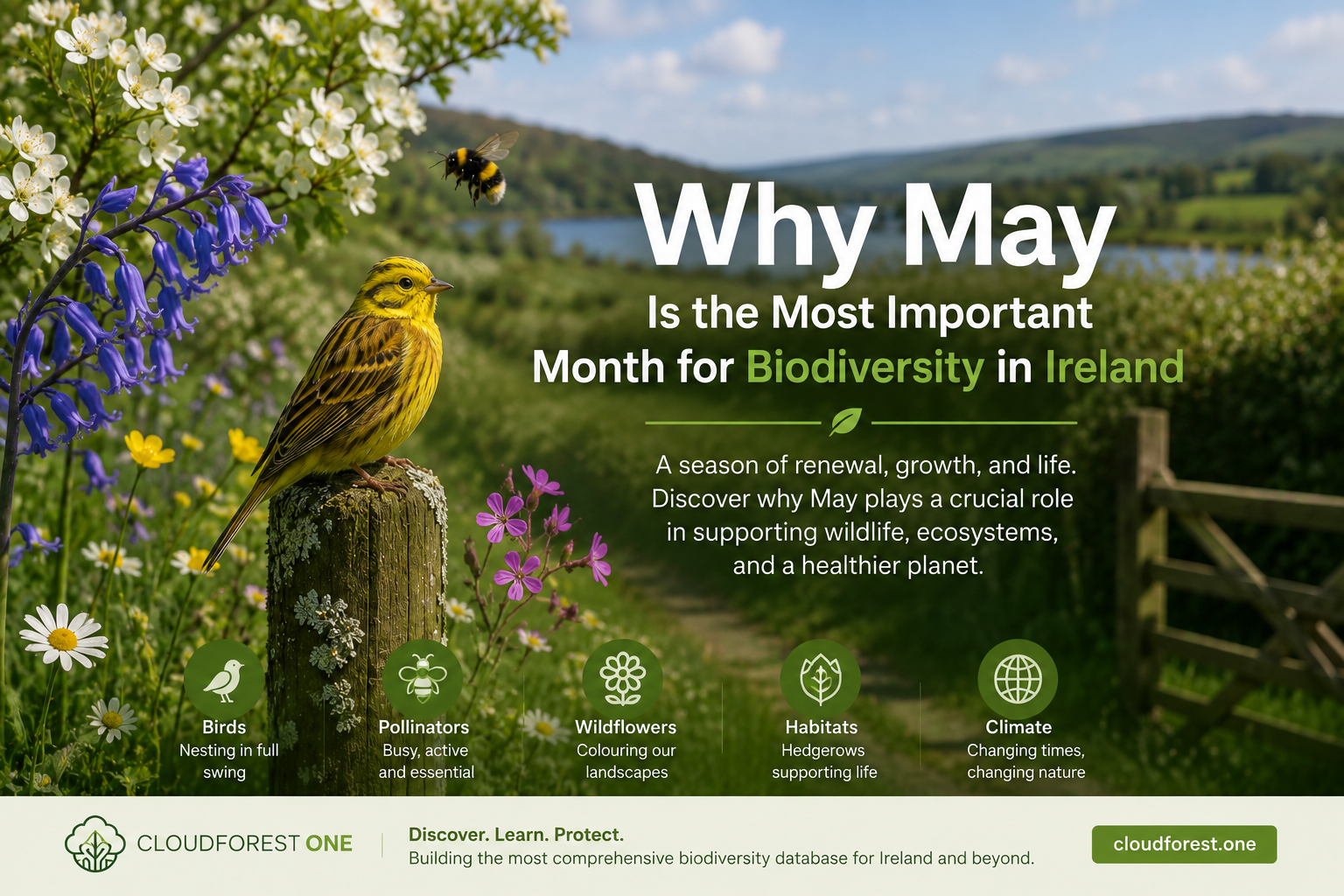
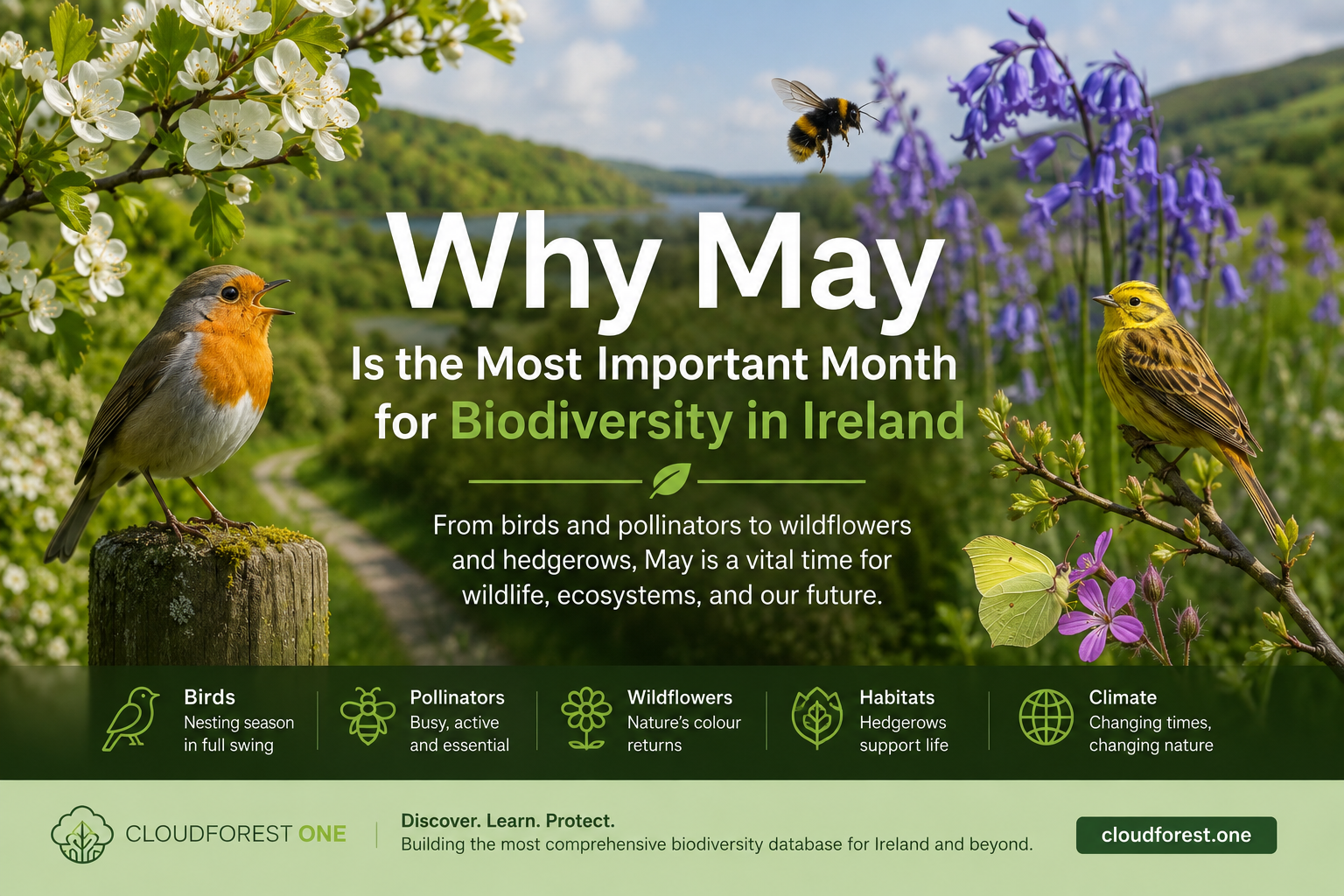
Why May Is the Most Important Month for Biodiversity in Ireland
A Season of Growth, Wildlife Activity, and Ecological Renewal
May is one of the most important months for biodiversity in Ireland. Across forests, hedgerows, wetlands, grasslands, and countryside habitats, nature comes alive with activity.
Birdsong fills the morning air, pollinators emerge in greater numbers, wildflowers bloom across rural landscapes, and ecosystems begin their most active period of the year.
For conservationists, researchers, photographers, and nature enthusiasts, May represents a critical time for observing, recording, and protecting biodiversity.
At Cloudforest One, the importance of species indexing and environmental awareness becomes especially relevant during this seasonal peak in wildlife activity.
What Is Biodiversity?
Biodiversity refers to the variety of life found within ecosystems, including:
Birds
Mammals
Insects
Plants
Trees
Fungi
Marine species
Microorganisms
Healthy biodiversity supports:
Pollination
Food production
Water quality
Soil health
Climate regulation
Ecosystem resilience
Ireland’s biodiversity is deeply connected to its natural landscapes, farmland ecosystems, native woodlands, rivers, and coastal habitats.
Why May Is So Important for Wildlife
May marks a major transition period in the natural calendar.
Longer daylight hours and warmer temperatures trigger increased biological activity across many species.
Key Biodiversity Events During May
Birds begin nesting and raising chicks
Pollinators become highly active
Wildflowers bloom in large numbers
Mammals increase feeding activity
Frogs and amphibians breed
Migratory birds return to Ireland
Insect populations expand rapidly
This makes May one of the best months for wildlife observation and biodiversity recording.
Birds Thrive During May
Ireland’s birdlife becomes especially active during spring.
Hedgerows, woodlands, and rural farmland fill with birdsong as species establish nesting territories and feed young chicks.
Common Irish Birds Seen in May
Yellowhammer
Robin
Goldfinch
Chaffinch
Blackbird
Swallow
Skylark
Barn Owl
The Yellowhammer bird, recently indexed on Cloudforest One, is one of the most iconic countryside species associated with traditional farmland biodiversity.
Its bright yellow colouring and distinctive song make it a favourite among birdwatchers across Ireland.
Pollinators Become Essential in Spring
May is a crucial month for pollinators.
Bees, butterflies, hoverflies, and other insects begin supporting plant reproduction across ecosystems.
Without pollinators, many native plants and food crops would struggle to survive.
Important Irish Pollinators
Bumblebees
Honey bees
Solitary bees
Butterflies
Hoverflies
Moths
Pollinators are essential for:
Wildflower reproduction
Crop production
Ecosystem stability
Food chain support
Unfortunately, habitat loss and pesticide use continue to threaten pollinator populations globally.
Wildflowers Begin Blooming Across Ireland
One of the most visually striking signs of biodiversity in May is the explosion of native wildflowers.
Roadside verges, meadows, woodland floors, and hedgerows become rich with colour.
Native Wildflowers Commonly Seen in May
Bluebells
Primroses
Buttercups
Cowslips
Hawthorn blossom
Dandelions
Red clover
Foxgloves
Wildflowers provide critical food sources for pollinators and support wider ecosystems.
Hedgerows Play a Vital Role in Biodiversity
Irish hedgerows are among the country’s most important wildlife habitats.
They provide:
Nesting sites for birds
Shelter for mammals
Food for pollinators
Ecological corridors between habitats
Species like the Yellowhammer rely heavily on healthy hedgerow systems.
Traditional hedgerows help maintain biodiversity in agricultural landscapes and support countless species throughout the year.
Why Biodiversity Monitoring Matters
As environmental pressures increase globally, biodiversity monitoring becomes increasingly important.
Scientists and conservation organisations monitor species populations to better understand:
Habitat decline
Climate change impacts
Species migration
Ecosystem health
Conservation priorities
Digital platforms such as Cloudforest One help organise and index biodiversity information for researchers, educators, conservationists, and environmental projects.
How Cloudforest One Supports Biodiversity Awareness
Cloudforest One continues expanding its environmental indexing capabilities by cataloguing species, habitats, and biodiversity-related information.
The platform helps support:
Environmental Education
Providing accessible biodiversity knowledge for schools, researchers, and the public.
Wildlife Conservation
Supporting long-term species awareness and ecological monitoring.
Ecological Research
Helping organise environmental records and species information.
Biodiversity Documentation
Creating structured digital archives of nature and wildlife.
As more species become indexed, environmental data becomes easier to access and preserve.
Climate Change and Seasonal Shifts
Climate change is affecting biodiversity patterns across Ireland and Europe.
Researchers are observing:
Earlier flowering seasons
Changes in bird migration timing
Pollinator disruptions
Habitat stress
Altered breeding cycles
Monitoring biodiversity during months like May helps scientists better understand these ecological changes.
How You Can Help Biodiversity in Ireland
Everyone can contribute to protecting biodiversity.
Simple Ways to Support Nature
Plant pollinator-friendly flowers
Avoid excessive pesticide use
Preserve native hedgerows
Leave areas of grass uncut during spring
Participate in birdwatching surveys
Support wildlife conservation initiatives
Record species sightings responsibly
Small changes in gardens, farms, schools, and communities can have a significant positive impact.
Why May Is the Best Month for Nature Enthusiasts
For photographers, birdwatchers, conservationists, and nature lovers, May offers extraordinary opportunities to experience Irish biodiversity.
The combination of:
Bird activity
Flower blooms
Pollinator movement
Longer daylight hours
Rich countryside landscapes
makes May one of the most rewarding times of year to connect with nature.
Final Thoughts
May represents a critical period for biodiversity in Ireland.
From nesting birds and emerging pollinators to blooming wildflowers and thriving ecosystems, the month showcases the importance of protecting natural habitats and supporting conservation efforts.
As environmental awareness grows globally, biodiversity indexing platforms such as Cloudforest One can help preserve valuable ecological knowledge for future generations.
Protecting biodiversity is not just about saving individual species — it is about maintaining healthy ecosystems that support life, climate stability, and environmental resilience.
Whether you are a conservation advocate, wildlife enthusiast, researcher, or simply someone who enjoys nature, May is the perfect time to appreciate and support Ireland’s remarkable biodiversity.