Forests That Buzz and Flow With Honey
A wonderful update from John Greenaway of the NIHBS Native Irish Honeybee Society who looks after, maintains and cares for our bees on Cloudforest Five . 🐝
As the trees rise at Mountoven so do the bees. The recent periods of warm, wet weather here in Kerry have been good to the native Irish honey bees and two colonies of dark, native Irish honey bees are coming through the winter. Smaller colonies can sometimes struggle a little during the winter months as numbers matter when it comes to survivability. 🐝
Fondant sugar is added to the tops of the frames and this gives them a food boost while times are harsher. At least one of the colonies is a little on the aggressive side and this may require re-Queening in the Spring, we will see. 🐝
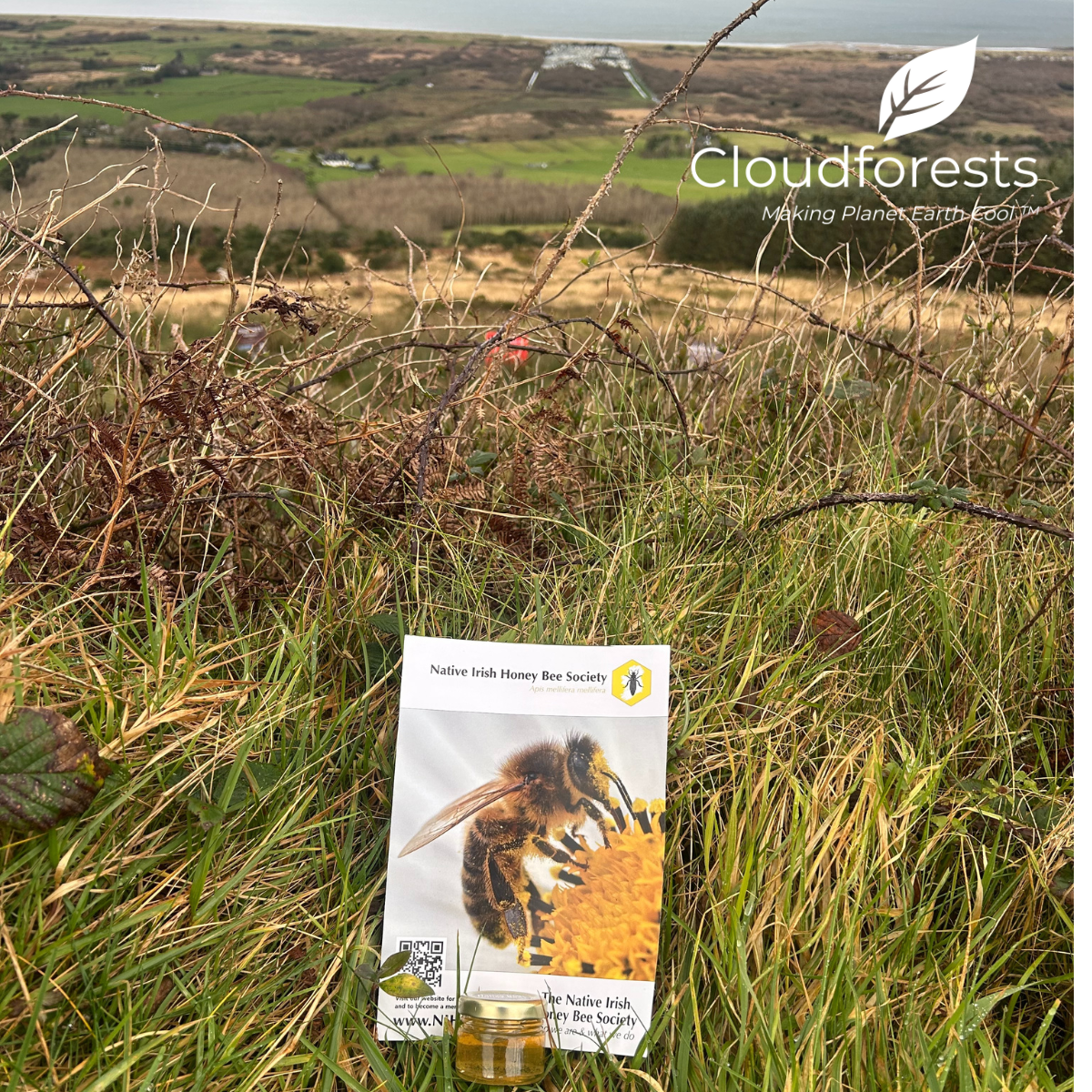
They have a great view over the Maharees and in Spring they will forage far and wide, often in the valley known as Gleann na nGealt, Glen of the Mad. It takes its name from the high concentrations of Lithium in the local water, helpful as a natural medicine. The rising trees are a hope for the future since honey bees, and other fauna, love tree habitats.
we were delighted to meet up with John and even better he gave us some honey from the site - now how can we make our CoolPartners lives better? 🍯

Native Irish honey bees, primarily the dark, hardy strain Apis mellifera mellifera, are a vital part of Ireland’s ecosystems and agricultural productivity; adapted over centuries to the island’s cool, changeable climate, they exhibit strong disease resistance, effective foraging in marginal weather, and a calm temperament that suits small-scale and hobbyist beekeepers. These native bees contribute disproportionately to the pollination of wildflowers, hedgerows and crops, supporting biodiversity and the resilience of native plant communities, while their genetic distinctiveness makes them an important resource for conservation and breeding programs aimed at improving honey bee health. Protecting native populations involves safeguarding diverse floral habitats, reducing pesticide exposure, controlling the spread of non-native bee strains and diseases, and promoting local, responsible beekeeping practices that prioritize genetic integrity.